
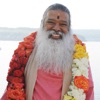

His Holiness Pujya Sri Swamiji visited Assam, the land of Kaamaakhya Devi for the first time on 7th January to 9th January 2010. This famous land was traditionally known as Kaama Rupa. Although the contemporary Capital of this state is Dispur, the traditional capital is GUWAHATI. (Guwa is Areca/ Betel nut and Hati = Market). Guwahati was very famous as Praagjyotish Pura. (City of Eastern Light ; Jyotish = Light. Prak = East.)
Assam, actually stands for ASAMA. (Sama is equal/ level. Unequal is ASAMA). Due to the geographical features of hill ranges, lush green forests, the landscape is not leveled. Hence, this region was known as Asama, which later came to become known as ASSAAM. (The language Assamese is also akin to Bengali, a derivative of Praakruta & Samskruta Script.)
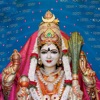
The Temple of Devi Kaamaakhya, seated above the Neelaachal Hill range, is said to be one of the 18 important abodes of Devi Worship. The genesis of these Ashtha Dasha Shakti Peethas, are attributed to the famous fable in the Puraanas.
Daksha Yagna – Sati Devi
Puraana (Mythology) narrates the story of Daksha Yagna and Sati Devi Viyoga. (In one of the incarnations, Mother Goddess was born in the clan of Daksha and wed Lord Shiva. Due to animosity with Shiva (son-in-law), Daksha conducted a Yagna without inviting Shiva and Sati. Out of family affection, Sati attended the Yagna, in spite of Shiva’s dissuasion. As expected, Daksha insulted Sati and Shiva in the sacrifice. Unable to endure this diatribe, Sati left the mortal body.
Shiva, was highly angered by the turn of events. He decided to teach Daksha a hard lesson and procreated Veerabhadra, as the chieftain of fierce Rudra Ganas to annihilate the Daksha and his Yagna. In no time, the entire celebrations were disrupted and Daksha was slain.
But, Shiva was still very angry at the demise of Sati Devi. Holding the Body of Sati Devi, Lord Shiva started a ferocious dance (Pralaya Taandava). Sensing the imminent danger, leading to the destruction of the world, Lord Vishnu used his discus (Sudarshana Chakra) to dismember the body of Shakti causing various limbs fall at different places. In this process of diffusion of Shakti ,Shiva become tranquil to resume penance.
In His discourses, Sri Swamiji has explained the philosophical meaning of this story. It was not any barbaric ferocious event, but a celestial event of exalt. Shiva and Shakti combine to generate the creation. In other words, this is Prakruti and Purusha. Different philosophical principles give myriad names to this process. However, the essence remains the same. Lord Vishnu, representing the phenomenon of protection, acted as a catalyst to diffuse the epicentre of Power Mass (Shakti Kshetra) to all over the sacred land. Accordingly, many part of the continent have flourished as Shakti Peethas. Wherever an important limb of the Shakti descended, that has become an important Shakti Peetham. In total 18 Prominent Places are identified, along with 36 other places of worship.
Creation
The place of Kaamaakhya is also famed for its Tantra Vidya (Alternate form of Worship, different than Vedic Traditions). Another story from the Puraana narrates that, this is was the focal point of Human Creation, even before the advent of Daksha and Sati. Prakruti is symbolised by the Ovary in the female form, as it holds and nurtures the seed of life. Purusha is symbolised by the Seed. The communion is known as the formation of foetus in humans. Similar process permeates all the creation in the world. Aadi Dampati (First forms of Male and Female embodiments) Shiva and Shakti had chosen this land to enable the Human Race with potency to procreate. Another important aspect of this concept is desire. Without a desire, a creation is not possible. Hence, the Goddess is called as Kaama Aakhya. (One with the name and fame of Kaama (Desire).
From the perspective of Adwaita Philosophy: Maaya is the phenomenon, without which the world, as visible in this form, would not exist. This fact is enumerated by branches of Vedantic understanding. All pervading Shiva or Para Brahman remains dormant and static, in the absence of kinetic energy in the form of Shakti. In fact, the Shakti without a form, needs a subtle carrier in the form of Shiva, who also reciprocally requires a gross form of Shakti to appear in a form. This, mystic principle of Shiva and Shakti is called inter – dependent relation or Avinaabhaava (Mutually dependent existence). This process is symbolised by Kaama Roopa Kshetra. Hence, we find the temple of Kaamaakhya or Kaama Roopi, standing for the Shakti Principle and the temple of Shukreshwara Mahadev (Shiva) representing the principle of Seed for Life force, to assume the full form. The place of Communion is situated at the place called Umaananda (an island in Brahma Putra River). Name of the River Brahma Putra also connotes the principle of Universal Creation.
Ten important aspects of Prakruti, called Dasha Mahaa Vidya are venerated here. (Dasha = Ten, Maha = Great, Vidya is knowledge. Ten Important facets of Creational procedure). At gross level, these faces of knowledge are represented by physical forms of Devi in Ten Temples.
The Visit
Sri Swamiji decided to visit this Kama Roopa Kshetra, after recording a series of discourses about Devi, that included references to this Kshetra. Meanwhile, a judge from Malaysia returning from Guwahati had narrated her experience. In the preceding night, His Holiness had a vision of Devi of Kama Roop. In less than a week, His Holiness set his foot on this historical, mythological and powerful Shakti Peetha. Sri. AYV Krishna DIG of Police, Sri. Nagaraj, Sri. Rajeev, Sri. Dileep, Sri Krishna Puranik and other local devotees made the arrangements to the delight of entourage.
Pujya Sri Swamiji sprinkled water from the Soubhagya Kund (Pond) of the Temple and offered Puja on Thursday 7th January 2010 to Mother Goddess in the Temple. On 8th January 2010, Sri Swamiji visited the ancient Navagraha Temple, which is said to have been sanctified by Lord Brahma himself. This unique temple, located on a hillock is typical for its Shivalinga shaped Nava Graha Deities. Poorva Tirupati Balaji Mandir, established by Kamakoti Peetham was another important recent addition to the sanctity of this land. Sri Swamiji, visited the temple, before proceeding to Vasishtha Ashrama. This ancient place is significant, as Sage Vasishtha (Guru of Sri Rama’s Clan) attained salvation and unified in Lord Shiva. A small rivulet flows thru this place.
In the afternoon, Sri Swamiji set sail on a boat in River Brahmaputra with a small group of devotees, to circumambulate the Umaananda Island. Later, he visited Shukreshwara Temple to perform Puja. It is said that offer of Puja at both these temples would help people with the problems of infertility.
In the evening, top brass of Assam Police visited Sri Swamiji and prayed for peace in the strife torn state, limping to normalcy after three decade long militancy. On 9th January, Sri Swamiji blessed Assam Veda Vidyalaya. Sri Krishna Puranik, Principal and Sri Khandelwal, Treasurer welcomed Sri Swamiji. More than 20 students are studying Shukla Yajurveda, Samskruta and allied subjects in this school. This is the only Veda School in the entire North – east. Sri Swamiji blessed the children and the school with a token donation and expressed hope that Students would come up in life to impart traditional wisdom to future generations.
Thus the great pilgrimage to Assam concluded. Jaya Guru Datta.
Report by VKG

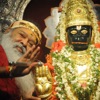
Pujya Sri Swamiji prays in front of the Kaamaakhya Temple

Special Ganapati statue where devotees offer coins

Feeding Pigeons

Ghantaa Rava - Sound of the bells

Archana at Shanishvara Linga in Navagraha Temple

Prayers at Vasishtha Ashrama - Place where Sage Vasishtha attained Salvation

Abhisheka to Shukreshwara Linga

Blessing the Shukla Yajurveda Students of Asom Veda Vidyalaya
Glimpses of the Boat ride in Brahmaputra River


Umaananda Island


Kaamaakhya Paatu Nas Sadaa.....May Goddess Protect us at all times |