

|
Pujya
Sri Swamiji in Udupi - 6 & 7 March 2001
Web Photos - Click here
Upon arrival
at the Pejawar Math, Sri Vishwa Prasanna Teertha Swamiji, the junior pontiff
in the Math received Sri Swamiji. The temple town of Udupi had assembled
around the Math to welcome Sri Swamiji. Udupi is
situated near the Arabian Sea coast in Karnataka. Udupi has two other
famous temples. They are Anantheswara Temple (Shiva) and Chandra Moulishwara
Temple (Shiva). They are situated in front of one another where as the
Krishna Temple is to the left of Chandra Mouleeshwara temple. Today the
fame of the Krishna temple alone brings to ones memory the name
Udupi. In the thirteen
century was born Sri Madhwa Charya, the great philosopher. After finishing
his studies he felt that the present day spirituality lacked devotional
feeling and was mainly logical discussion and logical exercise. He then
started the philosophical theory of Dwaita (Duality) in which
he argued that the world we see is not false and that the Atma and Paramatma
are different (hence duality). He also criticised the theory of Maya
and claimed that it was Vishnu Tattva. He also wrote several works on
Maha Bharata, Upanishads, Brahma Sutras, Puranas etc., The well-known
Dasa strain of devotional literature, which propagated the glory of Lord
through singing, was enriched by the likes of Kanaka Dasa, Purandara Dasa,
Vijaya Vitthala and others based their teachings of this great Dwaita
Philosopher. Madhwa Charya settled near Udupi and wrote many of his works.
One day while bathing in the sea near Vadabhandeshwara, he discovered
a small stone statue of Lord Krishna in the sea and brought it and established
the same in Udupi. It is said that the statue was actually from Dwaraka
in Gujarat and was lost in the sea when a ship capsized mid ocean and
the Lord wanted to settle in Udupi and hence was discovered. Madhwa Charya
after installing the Krishna temple arranged eight Ashramas (Ashramas
are known as Maths) around Udupi to perform the Puja to the Krishna temple
in a cyclic system of two years each. This two-year authority of each
Ashrama to perform Pujas in the temple is called as Paryaya. The eight
Ashramas are: Presently the Pejawara Matha is in the Paryaya and performs all rites in the temple. The present
senior seer of the Math, His Holiness Viswesha Teertha Sri Padangalavaru
(popularly known as Pejawar Swamiji) is widely respected and is very close
to Sri Swamiji and has visited Mysore Ashrama many a times. The 74-year-old
seer is simple, soft spoken, unassuming and ever smiling. His simple demeanour,
appearance, conduct and absence of any pretentiousness have won the hearts
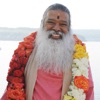
of millions of people. At 5 PM Sri
Swamiji was taken in a grand procession from the Math to the Krishna temple.
The Junior Pontiff Sri Vishwa Prasanna Teertha Swamiji led the procession.
As the procession reached the temple entrance, the senior pontiff His
Holiness Sri Viswesha Teertha Swamiji received Sri Swamiji with a garland
and a big smile. The three Swamis walked inside to the adjacent of the
temple to the Madhwa Teertha, a temple pond. There they sprinkled the
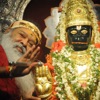
water on themselves and left for the temple. The Krishna temple, which
was established in the 13th century, is a quaint and old one with a 14-inch
tall stone Krishna idol in the centre. The temple does not have regular
large door through which the Darshan is done. There is a nine-holed window
through which the devotees peer inside to have a glimpse of the great
idol. Sri Swamiji had the Darshan of Krishna. There after all three seers
sat near the temple and gave Darshan to the devotees. Sri Swamiji then
presented RS. One Lakh (One Hundred thousand rupees) to Pejawar Swamiji
for the temple maintenance and administration. Sri Swamiji also presented
a rare and grand Navaratna Mala having a precious Light blue coloured
stone as pendent. Sri Viswesha Teertha happily received it and showed
it to His deputy who watched it admiringly. Then the three Swamis went
inside for private discussions. Sri Swamiji
was staying in the Pejawara Adhokshaja Math in Ratha Beedhi (Chariot street).
This street is a circular one around the temples and the eight Ashramas
are situated around this street. The all wooded structure of the Math
was remiscient of the ancientness of the town and its Maths. In the evening
Sri Swamiji sat with devotees and remembered the various visits of Sri
Pejawara Swamiji to Mysore Ashrama. Sri Swamiji recalled that when the
seer (who is 74 now) came to Mysore in the thirties as a young Swami,
Sri Swamijis grandmother was moved by the brightness and the aura
he generated and rushed to him and told that he looked like Bala
Krishna (child Krishna) himself. The young saint smiled and gave
her a Saree, said Sri Swamiji. On 7th morning
Sri Swamiji performed Sri Chakra Puja in the Math premises. Both the seers
attended the ritual. Sainath, an old and ardent disciple of Sri Swamiji
(he accompanied Sri Swamiji on Mridangam in the fist ever long play disc
recorded in Madras in 1976. It is called Nama Sankreertana) and his children
offered Music seva. His children played Saxophone while he played Mridangam.
After the Puja, the Pejawar Swamiji and his junior seer were offered Sandal
paste and Tulasi leaves as Puja Prasadam. They took leave of Sri Swamiji.
The Pejawar Swamiji returned and asked us if Sri Swamiji was comfortable.
He went on to the kitchen where food was being prepared for Sri Swamiji
and instructed the cook to prepare special sweets for Sri Swamijis
afternoon meal. He also said that he would send Prasadam from the Krishna
temple after the noon Puja. Sri Swamiji gave Teertham to all those assembled.
Some devotees from the area performed Pada Puja to Sri Swamiji. Thereafter
Sri Swamiji retired at 11 AM. At 4.30 PM,
Sri Swamiji proceeded to Geetha Bhavana in Udupi. This monumental museum
on Bhagavad-Gita was the brainchild of His Holiness Sri Sugunendra Teertha
Swamiji of Puttige Math, one of the eight Ashramas in Udupi. Sri Sugunendra
Teertha Swamiji warmly received Sri Swamiji at the entrance. Sri Swamiji
remembered the visit of Puttige Swamiji to Mysore Ashrama a couple of
years ago. Then Sri Swamiji was taken a tour around the complex. The Puttige
Seer is one of the most dynamic Swamis of the eight Ashramas in Udupi.
The Geetha Mandir is a standing testimony to his dedication and dynamism.
It has in its hollowed chambers, all the Shlokas of Bhagavad Gita sculpted
in Sanskrit on a black granite stone. A Christian sculptor carved it.
Sri Swamiji was immensely pleased with the display and the décor.
The Puttige Seer led Sri Swamiji to the second hall where they have stored
thousands of Bhagavad Gita copies published in various languages all over
the world. The Puttige seer started a new revolution in the area when
he called on them to write all the Shlokas of Bhagavad-Gita offering their
prayers to Lord Vishnu and praying for solutions to their problems. Thousands
of devotees responded to his call and have written down the Bhagavad Gita
in full and have offered them to be stored in the Geetha Bhavan. Sri Swamiji
was moved to find heaps and heaps of them in the third hall. Then a small
function was held where well-known scholar Bannanje Rama Charya welcomed
Sri Swamiji and Sri Swamiji spoke in admiration of the dynamism and magnetic
character of the Puttige Swamiji. Sri Puttige Swamiji offered a shawl
to Sri Swamiji and spoke on the greatness of Sri Swamiji, His mission
and Mysore Ashramas cleanliness and spiritual atmosphere. From Geetha
Bhavan Sri Swamiji walked to Raja Angana (auditorium) where a Healing
music concert had been arranged. Sri Swamiji played the Ragas Vitapi,
Sudha Kalyani and Keeravani. Well-known scholar, Sri U.P.Upadhyaya gave
welcome and introductory speech. The Pejawar Swamiji and the Puttige Swamiji
listened to the flow of music encompass and immerse them. After the concert,
a small honour programme was held. The Pejawara seer, Sri Viswesha Teertha
Sri Padangalavaru thanked Sri Swamiji for visiting Udupi during His Paryaya
period and requested Sri Swamiji visit again and again. He mentioned that
the idea of Rajangana (auditorium) came to him when he was participating
in a programme in Nada Mantapa in Ashrama. He also mentioned that Nada
Mantapa was at least three times bigger and far cleaner and more aesthetically
appealing than the Rajangana. He thanked Sri Swamiji for the hand some
contribution of RS. One Lakh (One Hundred Thousand Rupees) and the precious
Navaratna Mala for Lord Krishna of Udupi. He profusely lauded the musical
therapy Sri Swamiji was propagating in India and abroad as well. He said
Swamiji stood for all that is Indian and declared that very few saints
had the calibre and range of activities as Sri Swamiji has. His Holiness
Sri Sugunendra Teertha Swamiji of Puttige Math in his speech thanked Sri
Swamiji for visiting the Bhagavad Gita Mandir and further said that Swamiji
stood for all that is in Gita and goes a step further to Geetha also.
He lauded that Sri Swamijis music, which was so popular that in
all the places he toured in America, he found listening to Sri Swamijis
music a integral part of ones daily life. He too lauded the Mysore
Ashrama environs and its activities. Sri Swamiji,
in His speech mentioned that His visit to Udupi always brought happiness
and energy in Sri Swamiji and that the present visit was in honour of
the greatness of Pejawara Swamiji. Sadgurudeva continued saying that the
personality of Pejawar Swamiji is one of its kind and that such noble
souls are rare to come by. Sri Swamiji lauded the dynamic activities of
Puttige Swamiji and invited both seers to visit Mysore. Sri Swamiji requested
the Puttige Swamiji to include in the Gita Mandir, the flute of Krishna,
whose playing healed many a soul. For this purpose, Swamiji announced
a donation of RS. One Lakh. The Sabha
Programmes concluded at 7.15 PM At 8 PM, Sri Swamiji went to the Krishna
temple and witnessed from the Garbha Griha the Arati Programme to Lord
Krishna and offered prayers there. The Navaratna Mala necklace Sri Swamiji
had donated had been decorated on Lord Krishna and looked very beautiful.
At 9 PM,
Sri Swamiji, the Pejawara Swamiji and the Kaaniyooru Swamiji emerged out
of the temple complex to commence the Rathotsava (chariot festival), which
was being held to mark the visit of Sri Swamiji to Udupi. Measuring more
than 100 feet tall, the huge and towering chariot was elaborately decorated.
Sri Swamiji admired the intricate workmanship of the massive wooden chariot
and keenly observed the rituals preceding the chariot pulling. The Statue
of Lord Krishna was brought in a Golden Pallakki and was taken up to the
chariot and was placed inside. After Pujas, the pulling of the chariot
started. The Pejawara Swamiji gave coconuts to many of the devotees who
had followed Sri Swamiji and asked them to break them in front of the
chariot. After a frenzied coconut breaking ceremony, the chariot started
to move. It moves in the circular Ratha Beedi (Chariot street) around
which the eight Ashramas are situated. The mammoth chariot slowly moved
forward as devotees chanted Krishna Bhajans, Scholars recited Veda Mantras,
musicians drummed, pipers piped and dancers danced. Preceding the procession
were amusers wearing huge masks, people lighting up the night sky with
firecrackers, et al. In all it was a very impressive and poignant event.
As the chariot came in front of the Puttige Math, Sri Swamiji saw His
Holiness Sugunendra Teertha performing Arati to the chariot. Sri Swamiji
started to walk towards Puttige Math and went inside. This impromptu move
of Sri Swamiji made the Puttige Seer very happy. He showed around the
math and its activities. Sri Swamiji was led to the Vitthala Mandir in
the Math and was shown the Vitthala Saligramam. The seers sat and discussed
for a few minutes. Sri Swamiji took leave of the Puttige seer and came
out. Surprisingly the chariot had stopped and Sri Swamiji walked towards
it loudly wondering why it had stopped. As we approached the chariot,
we were amazed to see Pejawara Swamiji sitting on a wooden plank on the
road waiting for Sri Swamiji. Such was his affection and love for Sri
Swamiji. This act of kindness by Pejawara seer endeared him to Sri Swamiji.
The chariot moved on. As it approached the Pejawara math, where Sri Swamiji
was camping, Sri Swamiji took leave of the festival and bode goodbye to
Pejawara seer. Sri Swamiji sat on the front portico and watched the car
festival move on. Sri Swamiji sat alone for a little longer and was silent
and retired for the day. On 8th morning
Sri Swamiji left Udupi at 7 AM towards Nisarani village in Malnad area.
Karnataka state broadly can be divided in to three geographical zones.
The plains (Bangalore, Mysore), The Malnad area (Sagar, Shimoga, Bhatkal,
Nisarani) and the coastal area (Mangalore, Bhatkal, Honnavara etc.). The
journey took us through some of the most picturesque and breathtaking
areas of the state. On the left was the calm and might Arabian sea and
on the right was the Sharavati river flowing its last few kilometres as
an independent river before joining Arabian Sea. Behind the river were
the mighty peaks of the western ghats elevating the loftiness of the sight.
Sri Swamiji stopped enroute and washed His holy feet in the sea. Sri Swamiji
arrived in Mysore on the same day at 4 PM. Sri Guru Datta Compiled by Prasad
|