


Inaugural Session (10:20 AM -18th December 2007)
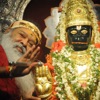
An impressive procession started from
Sri Dattatreya Temple, Universal Prayer Hall to Nada Mandapam for the
inauguration of the conference. Invitees, delegates, Pundits, cultural
troupe joined the procession of Silver Chariot carrying Lord Dattatreya.
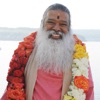
During the inaugural session, Avadhoota Datta Peethadhipati Sri Ganapati
Sachchidananda Swamiji, Sri Datta Vijayananda Teertha Swamy (junior
pontiff), Sri Mandali Buddha Prasad (Minister of fisheries, Government
of Andhra Pradesh), Sri V Rama Rao (Former governor of Sikkim & Chairman
of the Sammelan Organising committee), Sri Vachaspati Upadhyaya, Vice
Chancellor of Lal Bahadur Sastry Samskruta Vidya Peetham, New Delhi
and Prof. SK Mishra, secretary of Maharshi Sandeepani Rashtreeya Veda
Vidya Pratishthan were seated on the dais.
After inauguration of the conference, in his welcome address in chaste
Samskruta Language, Prof. SK Mishra has emphasised the vitality of
Veda in the sphere of Dharma and stressed the importance of Gurukula
System in the study of Veda. He has divulged that 61% of the total
grants disbursed by Pratishthan for the preservation of Heritage are
utilised by institutions and scholars of Southern India, which highly
speaks of the vibrant culture of the region. He hoped that the Sammelan
would achieve the objective of integration, introduction and improvisation
of skills among the scholar community.
In his presidential address Sri
V Rama Rao, has lamented that the rich treasure of Vedic Wisdom is
absent in common man. He exhorted the Veda and Sastra Scholars to leave
no stone unturned to spread the awareness about important aspects such
as Mathematics, Social Life style, Spirituality among public.
Sri Vachaspati Upadhyaya : (Key note address in Samskruta)
Knowing India without the analysis of Vedic wisdom is seldom possible.
Pundits in Hundreds and Thousands has have dedicated their lives for
the preservation and propagation of Veda Dharma. In this age of terror,
the message of peace is the right recipe for the amelioration of the
vagaries of the world. Let the chant and message of this conference
reverberate the legislature of this nation, resulting in the better
understanding and bonhomie among rulers and ruled. We compliment Sri
Swamiji for his extraordinary service to the society and prostrate
to one and all.
Sri Mandali Buddha Prasad (Guest of Honour):
Ideals preached in Vedic texts are ignored by the public and are necessary
for the peaceful co-existence of many nationalities, communities etc.
Vedic wisdom being the bedrock of our culture, deserves the attention
and adherence by one and all. May this conference strive in this direction!
Sri Ganapati Sachchidananda Swamiji (Benedictory message):
Though flowers are myriad, worship is one. Cows are myriad, but milk
is alike. Similarly the spirit that unites us as a nation is the principle
of Dharma, that is enshrined in Veda. Language could be different,
but the expression remains the same. Samskruta is the language of celestials.
It is the mother tongue of the world. Let us strive to understand the
meaning of Vedic texts by learning language. By knowing the meaning
of various Mantras, we chant in our rituals – our understanding of
life improves.
We should not limit ourselves to mere statements and lip service to
the Vedic Knowledge. Instead, put them into practice. Perform the rituals,
stipulated by Vedas for your own benefit. May your knowledge beget
the cutting edge for perfection!
On this historic day, Avadhoota Datta Peetham pledges support to Sudharma,
the only Sanskrit Daily News Paper in the entire world, published in
Mysore. Jaya Guru Datta
Earlier, Taittireeya Aranyaka Mantra Vibhaga (Compilation of Aranyaka
Mantras of Yajurveda by Vamshi Krishna Ghanapathi) and Atharvana Veda
Paippalada Sakha (Edited by Sri Kunja Vihari Upadhyaya and Sri Ashok
Kumar Mishra) were released on this occasion. Both these books are
published for the first ever time in history for the convenience of
students and scholars.
Academic session 1 (3:20 PM - 19th December 2007)
In the sacred precincts of Dattatreya Temple (Universal
Prayer Hall), the first academic session commenced. Dr. Vishnubhatla
Subrahmanya Salakshana Ghanapathi (Erudite scholar in Shadangas and
Veda Bhashya of Yajurveda & Asthana Vidwan of Datta Peetham) has
chaired the session. Sri P Ramanujan, an exponent in linguistics, computer
science as well as Yajurveda and allied texts has given a presentation
about Utility of Computers in Vedic Knowledge Database. He has offered
his help to scholars interested in implementation and research of
the software and system developed by CDAC (A Government organisation).
Shadvimsati Sutrani, a text about chanting of Krishna Yajurveda,
with commentary by the scholar was released on this occasion. Later,
Sri Chellam Srinivasa Ghanapathi, controller of Examinations, SV
Vedic University has enumerated the system of Varna Krama.
He has
explained the Eight essential aspects of each syllable: Dhwani (Sound),
Sthanam (Place), Karana (Apparatus), Prayatna (Procedure), Kaala (Time),
Swara (Intonation), Devata (Deity) and Jaati (Category). He has demonstrated
the Varna Krama (another scientific system of pronunciation, almost
on the verge of extinction) for few words and sentences chosen from
Krishna Yajurveda. He urged all the Veda Pathis to practise Varna Krama,
as Scriptures say that recitation of Mantras with knowledge of Varnas
(alphabets) will result in merit, complete in entirety.
Cultural Program
In the evening at 7 PM, Smt.Daliparti Uma Maheswari,
an artiste from Hyderabad has rendered Hari Katha - Kumara Sambhavam,
(story of the incarnation of Lord Subrahmanya) in Sanskrit Language.
This program won acclaim from scholars and commons alike.
Academic session 2 (10 AM - 19th December 2007)
Prof. Yugal Kishor Mishra, head of the Vedic department,
Sampoornananda Samskruta Viswa Vidyalaya, Varanasi chaired the session.
Dr.Vishnubhatla Subrahmanya Salakshana Ghanapathi
delivered the first of the lectures. The topic was Aatma Gunas (Eight
Self virtues) - prescribed in Scriptures, which are central to the
evolution of individual life span. Sri Ghanapathi has outlined the
scheme of Personal Vedic Rites, which emphatically corroborate the
magnitude of Aatma Gunas, especially Non-Violence. He quoted Goutama
Dharma Sutra, which enlisted 48 individual Samskaras (Rites) essential
to every human from the phase of Fertilisation to Last rites; Sacrifices,
Rituals … so on. It is elucidated by Goutama Maharshi (sage), that
the conduct of these 40 Rituals/ rites should culminate in the Aatma
Gunas (virtues of Self). If that does not happen, it is implied that
the conduct of these rituals/ rites has not yielded the intended result.
Vice versa, if one person has imbibed these virtues by the grace of
the God, it can be safely concluded that no deficit is due to non-
conduct of these rituals.
Non-Violence is dealt upon as a slogan by
the society. Unfortunately these slogans are limited to violence perpetrated
on humans, animals alone. Where as, the Vedic Scriptures have quoted
myriad instances to prove the existence of Life force in every creature
to exhort one and all to abhor violence towards every creature including
trees, plants, seeds, birds, animals and of course humans.
Manjunatha
Srouti, a scholar in Samaveda with extensive studies on modernity,
Atharvana veda and musicology delivered a lecture on Scientific aspects
of Atharvana Veda; to draw the attention of scholars to the coded references
to herbs for treatment of several ailments in Atharavana Veda. He has
also pointed out the references in Atharvana Veda to Gravitation Theory,
orbit system of several planets. He further called for extensive research
on the meaning of these texts, to unearth more and more essential aspects
for the benefit of the society.
Later, Paraasara Madhaveeyam book was
released on the occasion. This was the second volume, called Prayaschitta
Kaanda, a System of atonement for various mistakes, unknown/ deliberate
blunders committed in life due to unavoidable circumstance or fit of
rage/lust/greed. The scripture Parasara Smruti was composed by Sage
Parasara (Father of Rishi Veda Vyasa), detailing a code of conduct
for human life in this age of Kali. Later in 12th Century, a great
scholar Madhava has written an extensive commentary called Parasara
Madhaveeyam, to include aspects relevant to his contemporary period.
Sri Telakapalli Viswanatha Sarma, (Datta Peetha Asthana Vidwan) an
academic from Hyderabad has translated the text into Telugu, with his
annotations relevant to current day. The first of the volumes, called
Vyavahaara Kaanda was released last year.
Academic session 3 (3:20 PM - 19th December 2007)
The
session was presided over by Sri KV Ramakrishnamacharya, vice chancellor
– Jagadguru Ramananda Rajasthan Samskruta Viswa Vidyalaya, Jaipur.
Himself an erudite Sanskrit grammarian, Sri Acharya released a treatise
on Srouta System of Rituals, called Darsa Poorna maasa Prakaasa. The
publication was by Sri Vasudeva Paranjape in honour of his nonagenarian
Teacher Sri Dinakar Bala Krishna Jogalekar of Ratnagiri, Maharashtra;
who was present on the occasion.
Rituals are classified as 1.Srouta
2.Smarta 3.Pouranika. Rituals, for which – the methodology, procedures
are detailed by Sruti (Veda) are called Srouta Rituals. Ceremonies,
prescribed by Rishis, with an inference to Veda Vakyas (Vedic verses),
are termed as Smaarta Rituals. All other rituals and prayers found
in Puranas (mythology) are called as Pouranika Karma.
The book related
to Ishti system of rituals on the verge of extinction, stipulated to
be performed on every Poornima (Full moon) day and Amavasya (New moon)
day. It was reprint of a old publication in Devanagari (Samskruta)
script.
Later, Swamy Manasa Datta has explained the mission
of Sri Swamiji and activities of Datta Peetham in English to the visiting
scholars.
For this session, key note address was by Vamshi
Krishna Ghanapathi. He has spoken on the subject, Underlying meaning
of Vedic Rituals. Most of us conduct rituals, without knowing its meaning
and purpose. To know the meaning of the ritual, results in complete
benefit to the performer. Important Messages from some of the procedures
in the rituals are:
Iswara Samarpana – Offer the result of your action to God, without
expecting anything in return
Pray for Abundance to satiate your desire, rather than usurp someone’s
share.
Identify the common factors in every creature to increase acquaintance,
which is the essence of Vedic Texts
Realise that you are not the actual doer, but a tool in the hands of
divine. Hence, never claim/ think that you are the owner/ boss of the
objects/subjects/wealth, deemed to be your own.
Habituate to Identify divinity/ existence of all pervading Brahman
in every creature/ atom without any exception. Thus the chances of
perpetration of violence decrease.
Respect the right of life/ existence conferred on every being. Never
lay your claim on others’ rights. If found inevitable, request temporal
rights with humility.
Later a compilation of Ayurveda Sukti Sangraha (Compilation of Sayings
(Sukti) enlisted in Ayurveda) compiled by Dr. K Kala was released.
---------------
Cultural Program - Ashtaavadhaana
The evening program was a literary event of instant poetry called Ashtaavadhana.
The poet was Sri Dorbala Prabhakara Sarma, a literary activist committed
to the propagation of Samskruta Bhasha through out his career.
In this system, the poet’s concentration, ability to respond to the
challenges (questions) posed by eight scholars (Prucchaka – questioner),
memory are intrinsically tested.
Ashtaavadhaana System:
Eight of the challenges and conducting scholars:
Nishiddha Akshari – Kuppa Viswanatha Sarma (To request the poet to
compose a poem on a chosen theme in a metre (Chhandas) instaneously
and to forbid the use of syllables at every juncture.
Kaavya Pathanam – Viswanatha Gopala Krishna Sastry (To recite stanzas
from famous epics and request the poet to describe them and frame the
theme in his own poem)
Samasyaa – Surya Narayana Nagendra Bhat (To give a riddle – last line,
seemingly improbable and insane and ask the poet to complete the remaining
three lines)
Datta Padi – Rani Lakshmi Narasimha Sastry (To give four unrelated
words and ask the poet the frame them in a particular poem on an unrelated
theme. Ex: asking the poet to frame a poem on Shiva containing words
– Idli, Sambar, Chutney and Annam.
Vyasta Akshari – Maha Baleswara Bhat (To test the memory of the poet,
syllables from a stanza are given at various junctures in juggled form
and ask the poet to recollect the syllables to put them correct order
to make out the stanza)
Pushpa Gananam – Manjunatha Srouti (To test the concentration of the
poet, by giving many flowers at regular intervals and to ask for the
count of it)
Varnanam – Phaniraja Sastry (To ask the poet to compose an instant
poem on a particular metre, on a chosen subject)
Madhura Bhashanam/ Aprastuta Prasamsa – Telakapalli Viswanatha Sarma
(To divert the attention of the poet constantly to other unrelated
subjects/ queries and entertain the audience deflecting boredom.)
It was a marvellous effort by the poet, which was appreciated from
the depth of heart by Pujya Swamiji and the audience alike.
Academic session 4 (10 AM - 20th December 2007)
This last academic session was chaired by Paramahamsa Parivrajakacharya
Sri Datta Vijayananda Teertha Swamy of Avadhoota Datta Peetham. Dr.Vempati
Kutumba Sastry, vice chancellor of Rashtreeya Samskruta Samsthan, New
Delhi has delivered the key note address.
The topic was Relevance of Vedic Ideas in the contemporary society.
Sri Sastry has dealt with familial relations and conflict between communities,
as examples.
These days, there is so much talk about Women empowerment and financial
independency. The root for this is firmly entrenched in Vedic Ideas.
At the juncture of Vadhu Gruha Pravesa (during entry of new bride in
the house of the husband), she is entrusted with the over all management
of the house by the parents in law and husband. She is referred as
the empress of this house. To call the youngest and newest member of
the family – an empress requires humility on the part of in laws and
the bride.
Similarly, the Husband is rendered impotent in the absence of his wife
in the conduct of daily rituals, ensuring her the sole, responsible
and rightful place in the family house hold. Similarly, he sought to
dispel the notions to state that the hierarchy in the society is based
on the knowledge strata alone, rather than the strata of affluence
or administrative power. The system calls for all the phases of life
namely: Acquiring knowledge – Brahmacharya; Acquiring wealth, raising
own family, support the society to lead a respectable Dharmik life
Gruhastha; delegation of responsibilities, transfer of power to next
generation- Vaana Prastha and renunciation to attain the absolute truth
Sanayaasa; to be taken seriously and religiously. Thus, the Life style,
stipulated in Vedas is relevant to the contemporary society.
Later, Veda Nidhi Sri R Krishna Murty Ghanapathi, Chennai spoke about
the evidence found in Vedic Texts on modern day discoveries. He quoted
the reference Kim Tad Vishnor Balam? (What is the cause of the force?)
and referred to the subjects Galaxy, Orbitary system, Strength in Aranyaka
Mantras.
He has further delved upon the ecological preservation, thrust to maintain
the cleanliness of natural resources such as water, air and earth.
He pointed out that Sage Yaaska, (the ancient composer of Vedic encyclopaedia),
who opined that every Vedic text can be interpreted in different perspectives
and realms of Rituals, Philosophy, Science, Physical aspects etc. He
further renewed call not to swerve from the path of Dharma, as described
in Veda.
A discussion on Contemporary patterns of Vedic Study:
The last event was a symposium, conducted by Prof.SK Mishra, secretary
of Pratishthan. He informed that more than 100 Guru Kulas are functioning
under the auspices of Pratishthan in many parts of India. The Pratishthan
strives for the national integration thru Veda Parayanam at Sammelan
and regular interactions, propagation of the message of Sammelan to
various sections of the society. Four scholars from different states
were invited to speak on this occasion. Sri Krishna Murty Ghanapathi
(Varanasi) extolled the efforts of Pratishthan and called for the expansion
and strengthening of its activities such as support to Guru Kula System.
Sri VG Subrahmanya Ghanapathi (Chennai) called for support to performance
of Vedic Rituals and studies pertaining to Vedic Rituals, without which
the essentiality of the text would be missed.
Sastra Nidhi Sri ST Nagaraja Sastry (Bangalore), has called for efforts
for support to study of Higher Vedic Texts by deserving students. It
is equally important to preserve the Vedic literature along with its
meaning. (It may be noted that a mere Samskruta Scholar cannot interpret
Vedic Texts. To master this subject, a scholar should be subjected
to a minimum of 24 years of basic training and text based special training
for another 4 years.) Sri Mangipudi Venkata Sastry, a scholar of repute
from Vijayawada has spoken about the Sankalpa Sakti of Veda Pundits
and the power of Veda Mantras, which even go to the extent of ascertain
the potential of Deities. He has effectively voiced the opinion of
participating scholars/ delegates that such Veda Sammelan be conducted
regularly under the guidance and auspices of Sri Swamiji.
In his presidential message, Sri Bala Swamy has compared the three
vital aspects of Sri Swamiji Veda, Nada and Yoga to the 3 streams of
knowledge and practice. His mission Avadhoota Datta Peetham is the
Confluence of three rivers (Triveni Sangama), he added. He further
likened the organisation of this conference to Triveni Sangama, as
the collaborating organisers represent different sets of society. He
hoped that the message of this Conference shall reach the length and
breadth of the World.
Valedictory session (3 PM – 20th December 2007)
The Session commenced with Kouthuma Samaveda rendition by scholars
from Samaveda Maha Mandala of Mysore. Prof. Yugal Kishor Mishra was
the key note speaker. He elaborated on the theme of equality, propounded
in the Vedic texts.
Varna in Samskruta means both Syllable and Caste. It was never the
intention of the original texts in letter and spirit that one of the
Varnas is superior to the other. Categorisation of Varnas (Syllables
and Castes) was only for convenience of identification. In the system
of Syllables (Varna Maala) the Varnas are categorised by the Sthaana
(Origination of sound) and Prayatna (Effort required to generate the
sound of the syllable). Similarly, the Varnas in the society are based
on the origination from the parts of Virat Purusha and the occupation
of the sect. The omni present Paramaatman can never be superior at
one point and inferior at another. A true Pundit will alone identify
his presence every where. Hence, if the spirit of Veda Dharma practised,
there should not be any case for conflict in the society, he added.
To mark the occasion, the following books were released.
1) Commemorative Souvenir – The souvenir was released by the Chairman
of the Sammelan Sri V Rama Rao. This souvenir contained Essays by noted
scholars in Samskruta, English, Telugu and Kannada on many subjects
in Veda and Sastra.
2) Vaamana Karika a treatise on Rituals for Samaveda Sect was released
on . Services of Sri N Lakshmi Narayana Srouti, octogenarian ailing
scholar associated with Datta Peetham for more than 4 decades and inspiration
for this publication ware remembered on this occasion.
3) Siva Kathamrutam – Hindi version of the compilation of discourses
on Dwadasa Jyotir Lingas (12 famous Shiva Temples in India) by Sri
Swamiji was released.
Datta Peetha Prasasti
(Award of Datta Peetham to recognise outstanding talent and exemplary
erudition)
Ten eminent scholars were honoured with Datta Peetha Prasasti on this
occasion.
Sri Dinakar Bala Krishna Jogalekar (Ratnagiri, Maharashtra) – Rigveda,
Shandanga scholar and master of Vedic Rituals
Sri Krishna Murty Ghanapathi (Varanasi, Uttara Pradesh) Yajurveda Scholar
with commentary
Sri Yugal Kishor Mishra (Varanasi, Uttara Pradesh) – Sukla Yajurveda
Scholar and proficiency in Vedic Texts
Sri Kedaranath Sukla (Ujjayini, Madhya Pradesh) Proficiency in Vedic
Literature
Sri Chellam Srinivasa Ghanapathi (Tirupati, Andhra Pradesh) Noted Yajurveda,
Lakshana, Veda Bhashya scholar from Tirumala Tirupati Devasthanam
Sri Sri Kishor Mishra (Madhya Pradesh) Proficiency in Vedic Texts & Literature
Sri KVK Rama Krishnamacharya (Jaipur, Rajasthan) Samskruta Grammar
Sri Mangipudi Venkata Sastry (Vijayawada, Andhra Pradesh) - Veda Bhashya
Scholar
Sri Kunja Vihari Upadhyaya (Puri, Orissa) Atharvana Veda Scholar who
worked for the first publication of Paippalada Samhita
Sri Vishnubhatla Laksmi Narayana Ghanapathi (Madhurapuram, AP) Yajurveda
Scholar with Lakshna Sastra and Smarta Rituals
In his benedictory message, Pujya Sri Swamiji has
complimented the scholars for their deep interest and dedication in
the preservation of Dharma. He has stated that the principles of Vedas
are relevant all the times. Even though the superficial texture may
appear to have changed the essence remains the same, he stressed. He
exuded confidence that all the pious souls and devotees will spare
no effort for the resuscitation of our heritage and appreciated the
efforts undertaken by all the organisers. He further encouraged the
students to study Samskruta, which alone could be the bridge to elusive
Vedic wisdom.
All the Pundits were honoured with Sambhavana, Shawl, Certificate of
Participation and Souvenir. Travel Fare was separately paid to all
the delegates. It is heartening to note that irrespective of travel
distances and difficulties, scholars from all the southern states (Karnataka,
Andhra Pradesh, Tamil Nadu and Kerala); Rajastjan, Maharashtra, Delhi,
Uttarakhand, Uttara Pradesh, Jharkhand, Bengal, Orissa, Assom, Madhya
Pradesh have partook in the conference.
Veda Sadas
In the course of Sammelan, Veda Sabha was conducted in Sri Datta Venkateswara
Temple. This format of Veda Sabha, popularly known as Veda Vidwat Pravardhaka
Sabha (Improvement of Erudition in Vedas) is intended for the scholars’
personal scholarship improvement, in order to protect the lineage of
authentic chanting system. In this scheme, selected Mantras from different
chapters of all the four Vedas are recited by invited scholars in individual
groups (2-4 persons in each group), under the watchful eyes of senior
pundits, who are designated as observers. Although, this format of
Sabha is virtually unknown to many Pundits in this part of the country,
many of them took part enthusiastically. It was bliss to the ears to
listen to the sonorous chanting continuously for 3 days, uplifting
the spirits to a high plane of spirituality.
The list of Mantras, chanted in this Sabha, (along with the intended
benefits there of), is attached separately along with this report.
Sastra Sadas – Concept & Necessity
Traditionally, Veda is compared to Raw Gold Bar and Sastra to the tools
to make an ornament. Let us understand what exactly Sastra stands
for?
Saastra means to dictate. The terms and references in Vedic texts are
so vast and general to understand. Hence, to understand the Vedic Sentences
in right perspective our Rishis have stipulated that the Vedangas (affiliated
parts of Veda) are essential to know the meaning of Veda.
Vedanga (Shadanga)
1. Siksha Sastra - Science of sound origination and pronunciation
2. Vyaakarana Sastra - Grammar
3. Chhandas Sastra - Composition of Metres such as Gayatri, Ushnik,
Trishtup, Anushtup etc.
4. Niruktam - Encyclopaedia/ Thesaurus of terms and definitions of
words in Vedic Texts
5. Jyotish Sastra - Astrology to determine the right time to conduct
Vedic Rituals
6. Kalpa Sutra - Principles in the form of sentences, correlating and
compiling the procedures for
Vedic Rituals, Code of Conduct for individual/ public life, Applied
Geometry to build Yagasala, Personal Rituals/ Ceremonies; These Sutras
vary from followers of each Veda to another and generally draw inspiration
or inference from Vedic Sentences.
Along with these Shadangas (Six affiliated parts), other Upangas are
also required for proper understanding of Vedic Knowledge.
Upangas (Other affiliates)
Tarka/ Nyaya Sastra - Logic Based on the principles of Rishi Kanaada & Goutama,
this
Sastra is necessary to bring out finesse in the thought process.
Meemamsa - Understanding the Vedic Texts in correct perspective. In
this process Meemama Sastra sets the standards to interpret sentences.
2. Purva – Meemamsa - Poorva Meemamsa is the Sastra based on the principles
of by Rishi Jaimini, which enquires and determines the perspective
of various Vedic verses related with Karma Kaanda (Rituals). The word
Meemamsa generally refers to Poorva Meemamsa in general usage.
3. Uttara – Meemamsa - Uttara Meemamsa is based on the principles of
Sage Veda Vyasa, intended to bring out clarity in texts of philosophy
such as Upanishad and Bhagavad Geeta. As this deals with the last part
of Vedas, this is also called as Vedanta, also meaning the Final declaration
of Veda.
4. Dharma Sastra - Dharma Sastra is nothing but an extensive code of
conduct for public and private life. This has many interpretations
by many Rishis from different points of view. Although, Dharma Sutras
based on Vedic verses, Smruti and Puranas are the origin of the Dharma
Sastra, there are other texts such as Dharma Sindhu, Nirnaya Sindhu,
Veera Mitrodaya etc. useful in finding out intricacies of Dharma.
From time immemorial, Sastra Vaakyaartha Sabha (Sastra sadas in short)
was conducted in the format of current day seminar/ workshop/ symposium.
In this Sabha, scholars with multi faceted talents and vistas of knowledge
used to partake in the Sabha and give presentation on various subjects.
In contemporary ages, Sastra Sadas is confined to Vyakarana, Nyaya,
Poorva Meemamsa and Uttara Meemamsa Sastras. Accordingly debates and
presentations are limited to these four Sastras.
In Avadhoota Datta Peetham, Sastra Vaakyaartha Sabha is conducted in
these 4 Sastras and lectures on other subjects are planned earlier.
This year, more than 15 outstanding scholars have rendered their presentation
in 4 Sastras. It is to be pointed out that erudition in Sastra very
essential for understanding Vedic literature, is on decline. It is
disheartening to note that the ratio of Sastra Scholars (Higher learning
after Vedic Studies) to Veda Scholars (Basic Studies) is 1: 1000. Is
it not quite disheartening that we have less than 100 Erudite Sastra
Scholars in a population of 1.1 Billion?
In the current alarming scenario, it is decided to encourage brilliant
students to undertake the study of Sastras, after the completion of
basic Veda Adhyayana (with memorisation skills) to acquire analytical
skills with Sastra Adhyayana and continue the Sastra Sadas annually
to acquaint the students with tradition and enable them to have a glimpse
of the traditional education.
Jaya Guru Datta
A report by Vamshi Krishna Ghanapathi,
Trustee – Avadhoota Datta Peetham, Mysore
Convenor – Akhila Bharata Veda Sammelan & Sastra Sadas
sgsvedanidhi@gmail.com
With
inputs from Sri Mahabalayya, Samskruta Teacher of Datta Peetham
*********