
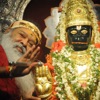
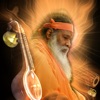
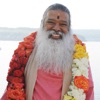

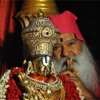
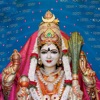
The traditional Devi Navaratri celebrations commenced at the the Avadhoota Datta Peetham in all its splendor and gaiety. The Day commenced at 7 am with the Ashrama morning prayers and Sri Swamiji Started the various rituals and worships at 9 a.m.. Sri Swamiji wearing a orange silk saree appeared like the Goddess Gowri herself. Sri Swamiji arrived at the Datta Temple and offered prayers there. From there the morning procession with Sri Swamiji and the Palanquin carrying the Pancha Loha metal idol of Raja Rajeswari went around the Prayer hall. The procession was led by Nada Swara Band (traditional Mysore Pipers), torch bearers, flag bearers, Spiritual staff bearers, Poorna Kumbha bearer, Rudraksha Kireeta bearer and the students of Ashrama Veda school chanting Vedic texts. Hundreds of devotees lined along the procession route and reverentially watched Sri Swamiji leading the Palinquin.
Sri Swamiji later performed Kumari Puja which involves offering prayers to girls aging from one to sixteen. . Sri Swamiji then performed the Kalasha Sthapana or invoking the different deities to the 12 brass pots (Kalashas) . Then the Nava ~Avarana Puja commenced. This Puja is a extraordinarily special worship performed no where else in this tradition. The Nava Avarana is walking around the Mantapa around which the twelve pots have been kept (Three on each side). Sri Swamiji makes nine Pradakshina (ambulation) around the Mantapa nine times (this is one Avarana). Such nine Avarana constitutes "Nava Avarana" Puja.
The at noon Sri Swamiji performed Anna Archana, offering prayers and offering the heap of cooked milk rice to the Gowri Devi.Later Sri Swamiji performed Devi Homa.
In the afternoon Sri Swamiji completed the rest of the Avarana Pujas and Maha Mangala Arati was performed at 6 p.m followed by the Chatur Veda Parayana (pundits chanting selected verses from the four Vedas). Dolotsava was the last of the Pujas where the Devi idol was placed on a swing and various offerings made.
At a brief Satsang, Sri Swamiji released a telugu book "Devi Navakam" called , containing the popular Devi Bhajan - Namostute Manostute - composed by Sri Swamiji. IN this small book, a lucid commentary has been written in Telugu - expousing the grand composition by Sri Kuchibhotla Chandra Shekhara Sharma. Then Sri Swamiji released a English book which contains the English translation of Sri Swamiji's Hindi Speeches delivered during a week's visit to Kashmir in 1982. The English translation was rendered by Late Sri P.N.Wanchoo, an ardent Devotee of His Holiness. The book was brought put by Smt.. Ratna Varma, Executive Trustee of Delhi Ashrama and daughter of Sri P.N.Wanchoo.
Sri Swamiji then sang a very special Bhajan " ". This Sanskrit composition of Sri Swamiji contains the 300 names of Devi as explained in the famous Sanskrit text 'Lalitha Trishati'. IN today's Bhajan Sri Swamiji sang 40 names. Each day Sri Swamiji will continue the Bhajan with more Devi names. By the last day, al the 300 names would be covered in this Bhajan. Sri Swamiji in a brief speech explained that the Bhajan has many Beejaksharas which enhance the power of the composition.
The function concluded at 8 pm.